
This started in
a very normal
household
Remote Buddi exists because in our house,
the remote never stayed in one place.
We have:
 a one-year-old
 a four-year-old
 a nine-year-old who lives on YouTube
 a TV that's always on
And at least one adult who is very confident they do not have ADHD…
while the rest of us are quietly living in it.
THE REMOTE NEVER STAYS PUT
In theory, it has a place.
In reality, it travels.
Living room.
Bedroom.
Kitchen counter.
Sometimes places no remote should ever be.
Often still in someone's hand.
With absolutely no awareness.
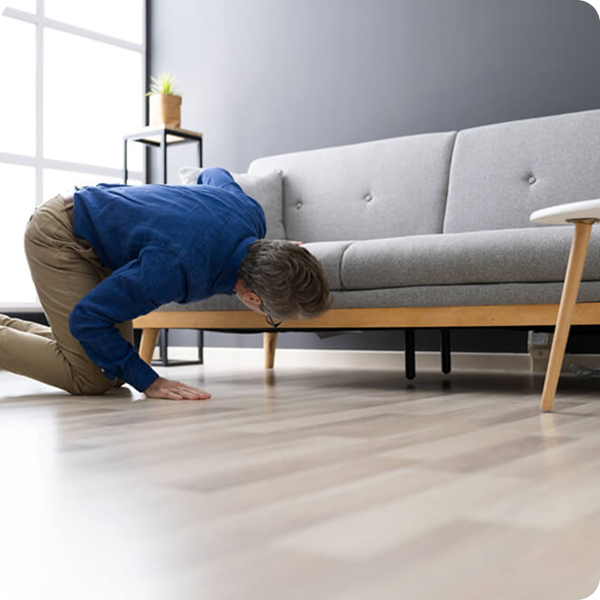
And then it happens
Someone asks,
"Where's the remote?"
Everything stops.

Couch cushions lifted.

Blankets shaken.

The fridge checked, just in case.

The baby briefly blamed.

The four-year-old denies everything.

The nine-year-old doesn't look up from YouTube.
You've lived this moment.
We've tried everything.
Seriously.

We taped things to the remote.
Including a pool noodle.
That was… a moment.
We bought a magnetic holder for the TV.
The remote never made it back there.
Now there's just a magnet on the TV.
We tried an alarm system - press a button and the remote beeps.
We lost the button.
We tried sleeves.
Silicone. Glow-in-the-dark. Even the ones that claim to hold an AirTag.
They stretch. They split. They slip off.
And once a baby, a dog, or gravity gets involved, nothing stays where it's supposed to - including the AirTag.
We tried routines. Rules. Putting it back "every time."
And the remote still disappears.
Not because you're doing something wrong -
but because none of those solutions were designed to
survive real life.
So we stopped trying
to hack the problem…
and fixed it properly.
Designed
with care.
Shared with care.
Remote Buddi was designed for real homes - including neurodivergent ones.
We know that small design details can make everyday life feel calmer, easier, and more manageable.

That's why a portion of proceeds supports organisations focused on neurodivergent support, sensory-inclusive living, and family wellbeing.
Because good design shouldn't just solve problems - it should help people feel more at ease in their own homes.
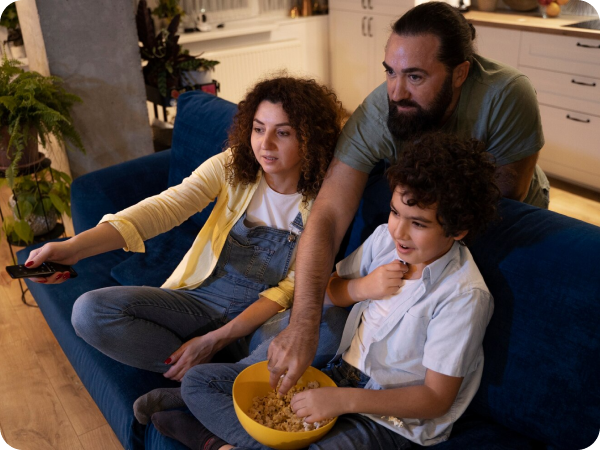
Lose it.
Find it.
You don't put it away.
You don't remember
where it lives.
You don't try harder
next time.
You lose it.
You find it.
That's the whole point.